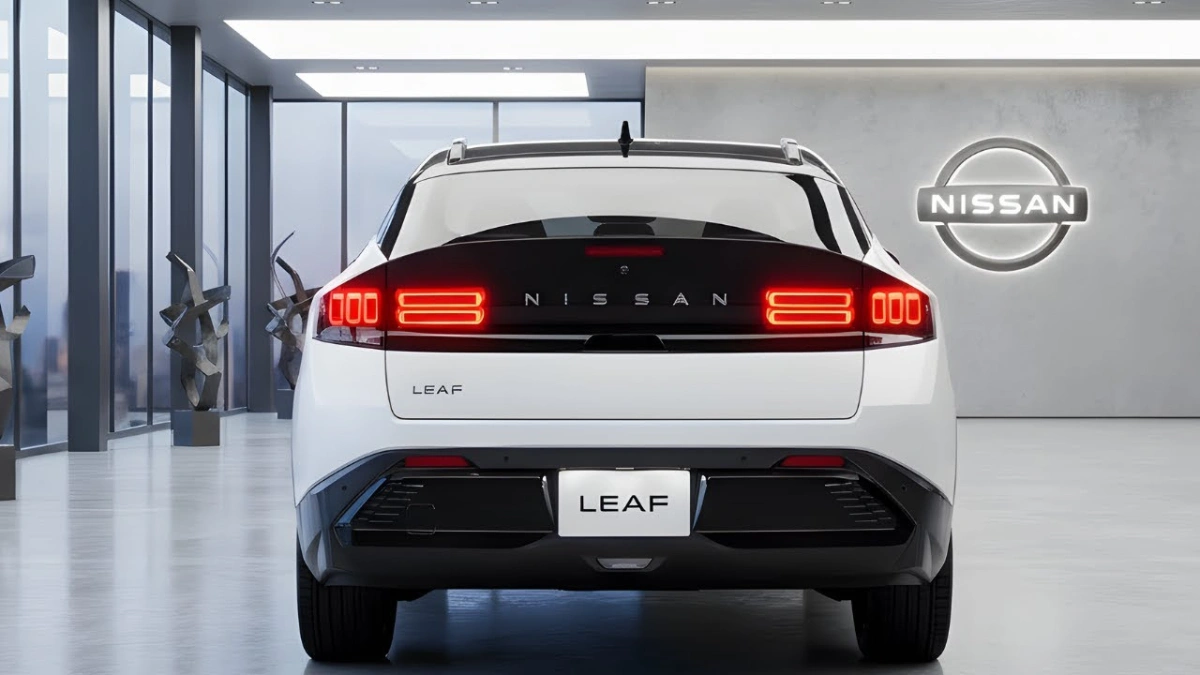
The Nissan Leaf, one of the world’s best-selling electric cars, is preparing for a major transformation in its 2026 model. With rising EV competition globally, Nissan is redesigning the Leaf with a sportier look, smarter features, and a much stronger battery system. The next-generation Leaf aims to deliver improved performance, higher range, and modern digital comfort, making it a more compelling EV for urban and long-distance drivers alike.
A Sportier, More Aerodynamic Design for the New-Gen Leaf
The 2026 Nissan Leaf moves away from its traditional hatchback silhouette toward a sleeker coupe-inspired crossover design. A sharper front fascia, slimmer LED headlights, sculpted character lines, and an aerodynamic roofline give the Leaf a more premium and futuristic look. Nissan’s new illuminated logo, redesigned alloy wheels, and improved airflow channels enhance overall efficiency.
This modern styling makes the Leaf more appealing to younger EV buyers seeking sportiness and practicality.

| Category | Expected Feature |
|---|---|
| Range | Up to 500 km (expected) |
| Powertrain | Single & Dual-Motor EV options |
| Platform | Updated CMF-EV architecture |
| Launch Timeline | 2026 global debut |
Stronger Battery Technology Offers Longer Range and Faster Charging
One of the biggest upgrades for the 2026 Leaf is its next-generation battery pack, expected to deliver up to 500 km of range on a single charge. Nissan is likely using improved lithium-ion or semi-solid-state battery chemistry for higher energy density and longer lifespan. Faster DC charging speeds will help the EV reach 80 percent charge in significantly less time, making long trips more convenient.
With better thermal management, the Leaf promises more consistent performance across different climates.
Next-Gen EV Powertrain With Improved Acceleration and Driving Fun
The 2026 Leaf is expected to offer both single-motor FWD and dual-motor AWD variants. The dual-motor version could deliver significantly higher horsepower and quicker acceleration, transforming the Leaf into a more dynamic and engaging electric vehicle. Instant torque, refined throttle response, and a lower center of gravity ensure smooth and controlled driving, whether in city traffic or on the highway.

The updated suspension and steering tuning will further enhance the driving experience.
A Minimalist, Tech-Packed Cabin With Premium Comfort
The interior of the 2026 Leaf will feature a cleaner, more modern layout with upgraded materials and advanced digital displays. A larger infotainment system with NissanConnect features, wireless smartphone integration, a fully digital driver cluster, and customizable ambient lighting elevate the cabin experience.
Sustainable materials, ergonomic seats, and improved noise insulation showcase Nissan’s commitment to eco-friendly luxury.

Enhanced ProPILOT Safety Suite With Smarter Autonomous Features
Nissan is expected to include an upgraded version of ProPILOT Assist, offering better lane-centering, adaptive cruise control, autonomous emergency braking, blind-spot detection, and automated parking. Several new sensors and cameras will improve real-time driving assistance, making the 2026 Leaf one of the safest EVs in its class.
These upgrades will support semi-autonomous capabilities geared toward highway travel and urban safety.
Practical Urban-Friendly Dimensions With Larger Cargo Space
Despite adopting a sleeker design, the 2026 Leaf is expected to offer improved boot space and better interior room thanks to its updated EV platform. The flat floor arrangement enhances passenger comfort, while flexible rear seats allow families and commuters to maximize storage capacity with ease.

The Leaf retains its identity as a practical, everyday electric hatchback with upgraded versatility.
Expected Pricing and Global Market Positioning for 2026
The 2026 Nissan Leaf is expected to be priced competitively between ₹30 lakh and ₹45 lakh (global pricing equivalent) depending on range and powertrain. It will compete with the Hyundai Kona EV, MG4 Electric, Renault Megane E-Tech, Volkswagen ID.3, and Toyota bZ3.
With improved styling, range, and features, the Leaf aims to regain leadership in the compact EV segment.

Conclusion:
The Nissan Leaf 2026 represents a major leap forward for one of the world’s most iconic electric cars. With a cutting-edge battery system, improved range, sporty design, advanced safety tech, and refined driving performance, the new Leaf is built for the next generation of EV adopters. As the global shift toward electric mobility accelerates, the Leaf’s 2026 update positions it strongly in the competitive compact EV market.
Disclaimer: The features and specifications listed here are based on early reports, industry insights, and global EV development trends. Final details may change after Nissan’s official reveal.